

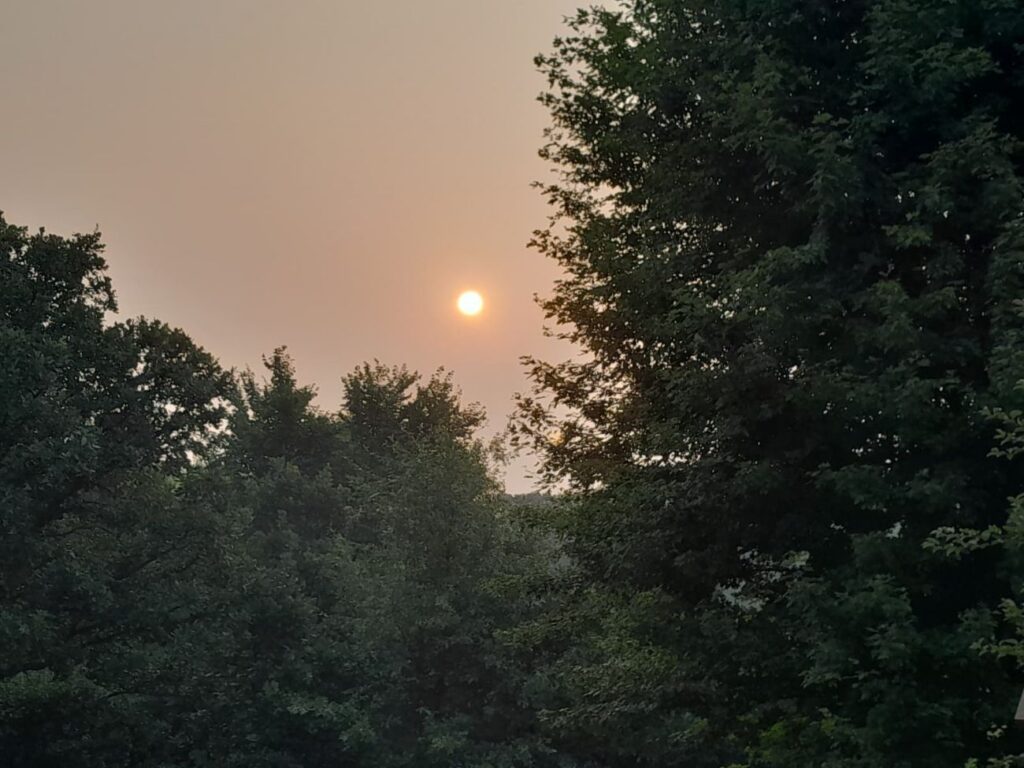
The smoke came on Wednesday afternoon. I watched it settle outside the window from my desk as the sun disappeared behind a gray smog, the trees became absorbed in haze, and the sky turned white.
After work, I coughed as I walked to my car for an evening gym session. I hit recirculate on my car’s air conditioner, hoping to keep in the clean air. The gym smelled of smoke as I laced up my shoes. By Thursday morning, I had a sore throat, and Thursday afternoon, I gave up sitting at my desk to finish the day’s work holed up by an air purifier.
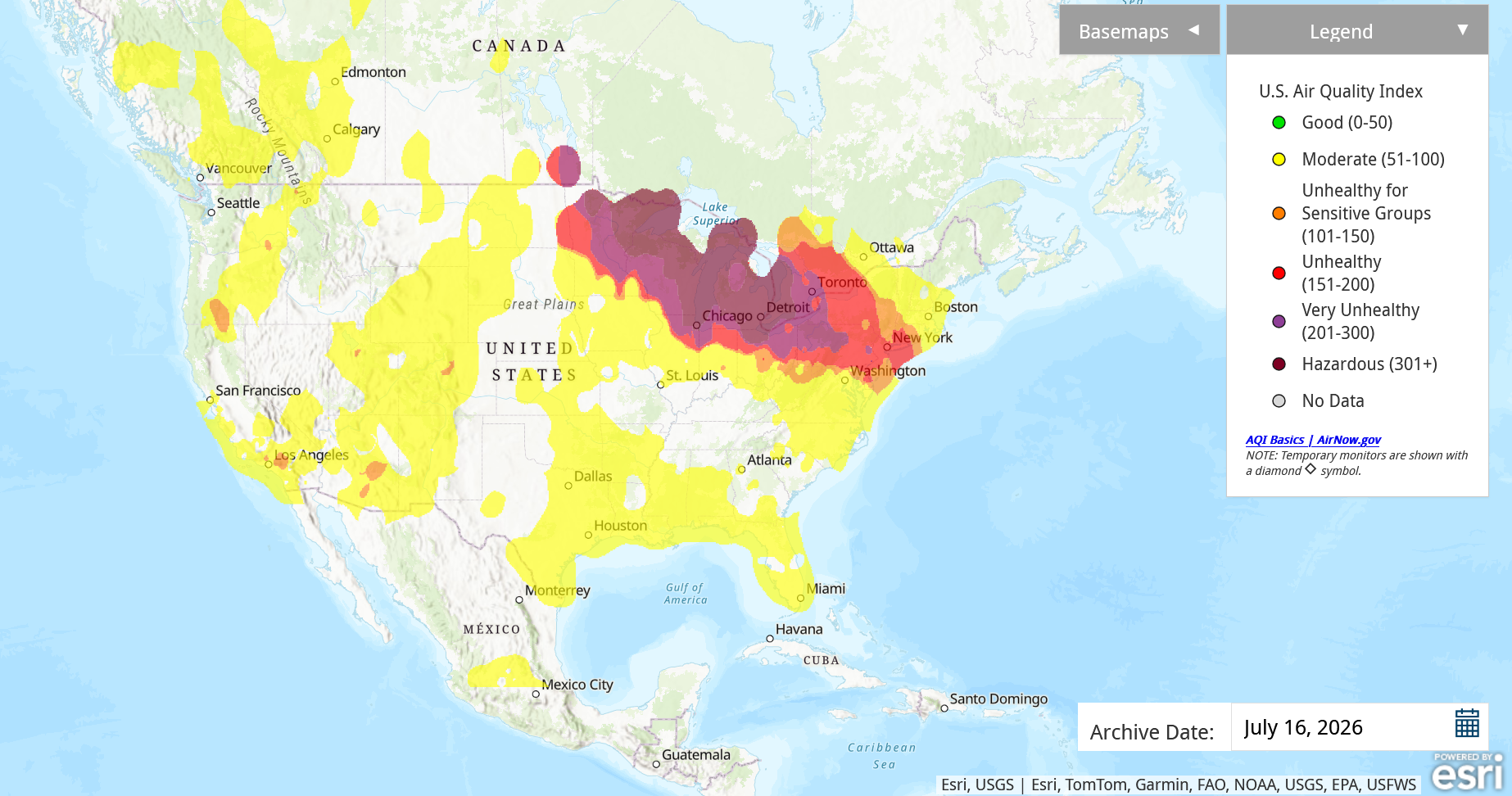
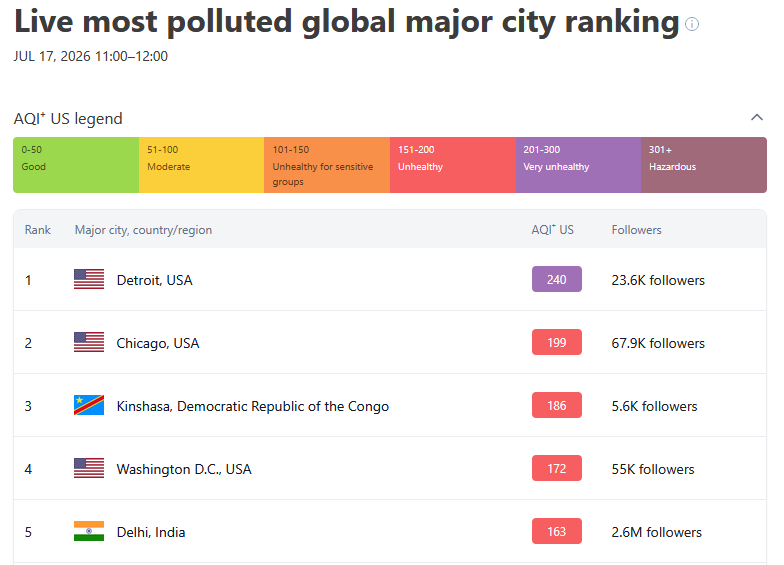
Air quality reached the “very unhealthy” and “hazardous” levels that week, and soon the smoke migrated south to reach Virginia and the nation’s capital. On Friday, three American cities were in the top five most polluted cities globally, with Detroit, Chicago, and Washington D.C. beating Delhi, India, and countries without the U.S.’s strict environmental regulations.
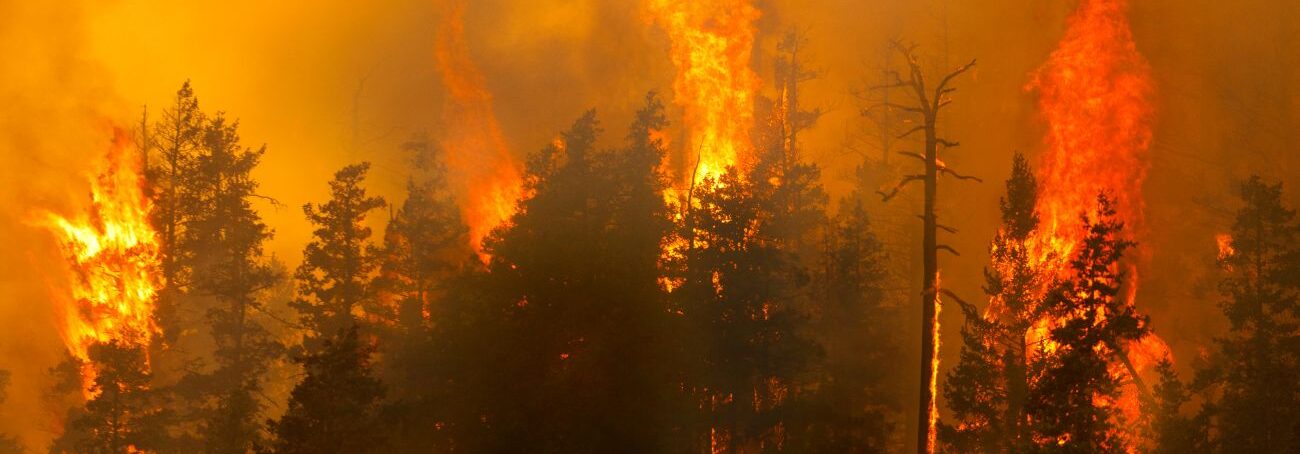
All of this was a direct result from Canada’s devastating wildfires this year. So far, 6.9 million acres have burned. Canadians in the fires’ paths have been ordered to evacuate, leaving behind their homes and land. And those millions of scorched acres represent countless natural wonders and animal habitats.
But this blaze is far from an unavoidable disaster—it’s a cautionary tale that many American lawmakers should heed.
Canadian officials have blamed climate change for the uptick in wildfires in recent years, but those of us living in the Midwest can recall just a few summers ago when the air was clear. Now, each summer seems to bring smoke thicker than the year before. This signals a much more acute cause than supposed climate change.
The immediate blame lies with Canada’s own policies. Canada has neglected its forest management and changed to a fire suppression strategy. It’s not alone in this new method, with several U.S. states joining in on the option that is often touted as more eco-friendly.
But the results are clearly far from environmentally sound. In America, uncontrolled fires burn through California and the western U.S. year after year, and as the arson start to the Palisades Fire in Los Angeles reveals, it only takes one missed fire to overtake entire areas and communities—especially when coupled with bad governance during fire management.
These fires thrive on dead trees and underbrush for fuel. As a result, conventional forest management advises strategic thinning and safe, controlled burns. These practices result in woodland that is less susceptible to wildfires and, in the case of a wildfire, a fire that is more easily subdued.
This should be a non-partisan issue, and yet, when climate change is an easy excuse for lazy governance, it’s citizens who pay the price.
Across the northern U.S., winter is frigid and inhospitable, with summer as the temperate part of the year for fishing, camping, and outdoor sports. Kids are out of school, the day is long, and the weather is full of potential.
But this year, access to the Boundary Waters along the U.S.-Canadian border closed, the weather report advised everyone to remain indoors, and my local rock radio station dedicated an hour to pollution-themed songs.
Thursday afternoon, I made the same trip to the gym after work. The nearby playground was empty, and a construction worker walked to his truck after a day laboring exposed to the smoke. Life can’t be paused every summer when negligent governance lets millions of acres burn.
And even after the worst of the smoke disappears, the forests will still be gone, and the pollution will have done its damage to anyone caught in its wake.
For American lawmakers, Canada should be an unignorable example of what happens when common sense conservation policy is replaced with climate change excuses. Americans shouldn’t have to live like this, and we should demand better from our own lawmakers than our northern neighbors.